Faculty in Residence Program
UCR Residential Education works with Faculty who live in the community and strive to build connections and mentorship with residents through intentional programs, community hours and general initiatives.
Purpose & Vision
The Faculty in Residence (FIR) Program currently houses four UCR faculty members, who spearhead initiatives and strategies to build strong connections and networks with our resident populations.
A Faculty-in-Residence (FIR) is a UCR faculty member who lives among the residents of UCR Housing to promote an intellectual climate and residents' academic involvement. FIRs work directly with the Assistant Director for Living-Learning Communities & Academics and other Residential Education staff to promote residents’ academic achievement, individual growth and personal responsibility. FIRs also assist Residential Education staff in promoting a safe, inclusive environment. These goals are accomplished through initiatives such as attending building or hall programs, eating meals in the dining halls, holding office hours and working with Residential Education staff and Faculty Mentors to provide activities and programs.
The Faculty in Residence team facilitates programs that support the academic achievement of the entire residential community and of designated Academic Living-Learning Communities. The goals, resident learning outcomes and initiative requirements for the FIR team were developed in alignment with the missions, visions and values of the Department of Residential Life and the Division of Student Affairs.
Meet Our Faculty in Residence
"Sticks and bricks may break our bones, but words will most certainly kill us." — Hortense J. Spillers
Vorris Lynn Nunley, PhD, specializes in Rhetorical Theory & History, African American Literature and Culture, Black Study, Public Discourse, and Myth & Religion as they relate to daily life. Through rhetoric, he focuses not only on how humans use language and images, but also on how language and images use humans to shape and reshape what counts as reality, truth, and success. Dr. Nunley's literary focus is on post-1945 Literature and Culture, including Black Speculative/Science Fiction and Afrofuturism. His work on myth and religion focuses on the importance of spirituality and how myth and storytelling continue to shape values, allowing us to experience meaningful lives. Dr. Nunley enjoys field trips with students (to art, film, talks, and bookstores), editing essays and applications, and discussing students' academic and personal issues during community hours.
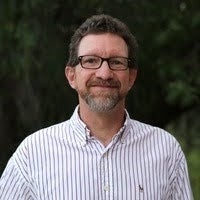
Stephen James is an American-born, British dual-national. Dr. James returned to the United States after 25 years working as a consultant in intercultural communication in the Philippines, Kazakhstan and Turkmenistan in Soviet Central Asia, England, Switzerland and Germany. Dr. James completed a BA in History (1984), an MDiv in World Religions (1990) and a Master of Philosophy in Media and Communications at the University of London (2011). Dr. James returned to his roots in Vietnam and Taiwan — having been raised bilingual in Vietnam during the “Vietnam/American War Era” (1962-1975) and having attended secondary school and Soochow University in Taiwan —completing an MA in Southeast Asian Studies (2015) and a PhD in Cultural Anthropology at the University of California, Riverside (2018). At UCR, Dr. James is Co-Director of the Liberal Studies Program, Faculty in Residence and a continuing Lecturer in Anthropology and Liberal Studies.

Cristina Gomez-Vidal, PhD, MSW, is a social scientist specializing in health equity, governance and place, with a particular focus on underrepresented and structurally vulnerable communities. Her research explores the intersection of governance systems and health disparities, with an emphasis on unincorporated communities across the U.S., which account for an estimated one-third of the nation's population. Dr. Gomez-Vidal employs a combination of quantitative, qualitative and geospatial methods to examine how governance structures influence health outcomes, particularly in relation to environmental and climate-related challenges. Her work provides valuable insights for policies that aim to enhance community resilience and promote health equity.
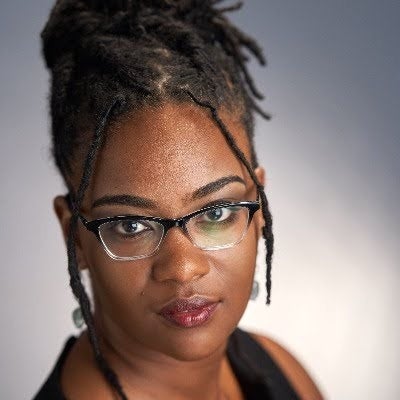
Dr. Jalondra A. Davis is a Black feminist artist/intellectual working at the intersections of Black Studies, Women's and Gender Studies, and contemporary genre fictions and popular culture. She has work on Black speculative fiction and culture published in the "Journal of the Fantastic in the Arts," "Shima Journal," "the Museum of Science Fiction Journal of Science Fiction," and is forthcoming in the "Routledge Anthology of Co-Futurisms." Her monograph in progress, "Merfolk and Black Being in Water," analyzes the many appearances of mermaids, water spirits and other aquatic beings in African diasporic literature, art and popular culture, with a focus on narratives that engage and interrogate the transatlantic slave trade and its afterlife, Western modernity and the Anthropocene. She is the author of the novel "Butterfly Jar" and talks mermaids, fantasy and Black aquatic life on the "Merwomanist" podcast.